
Researchers Test Nutrition-Based Approach to Protect Brain Health in Older Adults at High Risk for Alzheimer’s
A Rutgers Health study explores whether alpha-linolenic acid (ALA) can support good memory functions and brain vascular health
Rutgers researchers are launching a clinical trial to explore whether alpha-linolenic acid (ALA)-enriched nutrition can improve memory and brain health in older adults with mild cognitive impairment, as well as carriers of the APOE4 genotype, the strongest known genetic risk factor for Alzheimer’s disease.
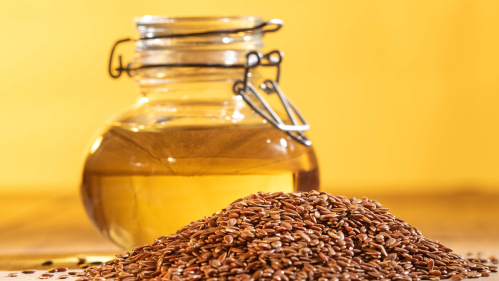
ALA is a healthy fatty acid found in foods such as flaxseed, walnuts and canola oil. ALA-enriched nutrition is intended to help the brain produce the healthy fats it needs for memory and overall brain function.
This study will allow us to look at cognition, brain imaging, and blood markers together.
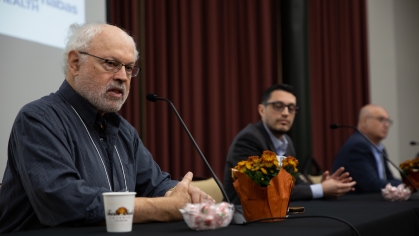
Michal Schnaider Beeri
Director, the Herbert and Jacqueline Krieger Klein Alzheimer’s Research Center
The study will examine whether daily ALA supplementation can improve memory and thinking, strengthen the brain’s protective blood-brain barrier – a filter that shields the brain from harmful substances – and support brain blood vessel health in individuals at high Alzheimer’s risk.
“People who carry the APOE4 gene are at higher risk for developing Alzheimer’s, and unfortunately, they also appear to have more adverse effects from currently approved treatments,” said Michal Schnaider Beeri, director of the Herbert and Jacqueline Krieger Klein Alzheimer’s Research Center in the Rutgers Brain Health Institute and a core member of the Institute for Health, Health Care Policy and Aging Research. “Identifying treatments that can help maintain brain health while minimizing adverse effects in this high-risk population is therefore critical.”
ALA is especially promising because it is converted by the body into docosahexaenoic acid (DHA), a fatty acid that plays a critical role in healthy brain structure and function. While DHA supplements have shown limited cognitive benefits in past studies, individuals with the APOE4 genotype often have low levels of DHA in the brain, possibly because of difficulties transporting it across the blood-brain barrier.
“We are looking for safe, affordable strategies that may help protect the brain earlier, before dementia develops,” said Schnaider Beeri, who is leading the study. “By providing ALA, we hope to boost the brain’s own production of DHA, while also improving the health of the blood vessels that supply the brain. In our previous studies using mice engineered to carry the human APOE4 gene, we saw significant improvements in memory as well as in the structure and function of the blood-brain barrier. This clinical study builds on those findings to test whether ALA can produce similar benefits in people.”
The six-month clinical trial is recruiting adults 60 years of age or older with mild cognitive impairment who carry at least one APOE4 allele. Participants will receive either a daily ALA supplement or a placebo. Researchers will assess changes in global cognition, memory and executive function as well as brain imaging measures of blood-brain barrier integrity and cerebral blood flow. Blood tests will examine biomarkers related to brain vessel health and neurodegeneration.
“This study will allow us to look at cognition, brain imaging, and blood markers together,” said Schnaider Beeri. “That gives us a more complete picture of how ALA might benefit brain aging.”
Conducted in collaboration with the Rutgers Clinical Research Center and Fred Kobylarz, professor at Robert Wood Johnson Medical School, in the Parker Health Group Division of Geriatrics, and a geriatrician at Rutgers Health and the RWJBarnabas Health Medical Group, the findings will lay the groundwork for a larger multi-site clinical trial.
With Alzheimer’s drugs offering relatively limited benefit and potential side effects, particularly for APOE4 carriers, Beeri said this approach could have a broad public health impact, offering a promising, low-cost, safe and therapeutic avenue for older adults at high dementia risk.
People interested in participating in the study can complete the online ALA Study Form, contact alastudy@njms.rutgers.edu or call 848-932-8412.